
TCU Architectural Lighting Design Student Earns LEED Green Associate Credential
Lily Plaster is ahead of the game. The TCU architectural lighting design senior recently earned the LEED Green Associate credential, demonstrating foundational knowledge of sustainable building practices in the Leadership in Energy and Environmental Design rating system.
While students are eligible to take the exam, Alyssa Humphries Stewart, associate professor of design and director of the Center for Lighting Education, said the credential is more commonly pursued by professionals looking to specialize in sustainable design.
“For a student to take the initiative to not only identify their interest in this area, but then to study and pass this rigorous exam is a signal to potential employers and clients that Lily is proactive and can contribute to their projects on day one,” Stewart said.
For Plaster, pursuing the credential while still at TCU was an intentional choice.
“One of the biggest reasons I decided to pursue LEED credentials while still in school is to take advantage of still being in study mode,” Plaster said. “Once you graduate, it only gets more difficult to take time out of the day to study for exams.”
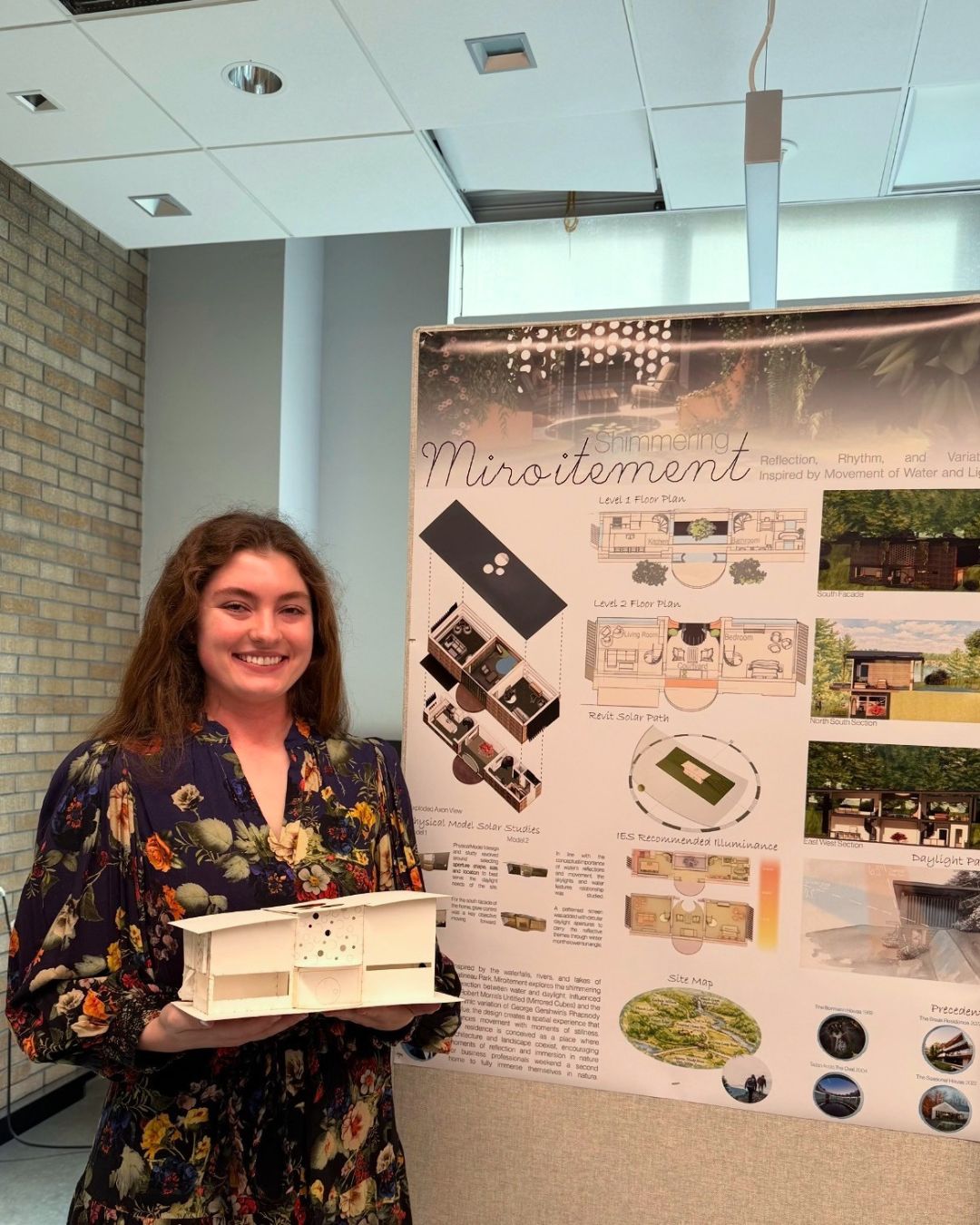
Sustainability in the Design Studio
Plaster's preparation also built on concepts already embedded throughout TCU's Architectural Lighting Design curriculum. Students study sustainability, energy conservation, and passive design while learning
to consider how architectural lighting decisions affect both people and the environment.
Through hands-on coursework, students explore daylighting, passive design and electric lighting while learning to balance energy consumption, visual performance and code requirements.
“Architectural Lighting Design, and the Department of Design in general, emphasizes the multidisciplinary aspects of design,” Plaster said. “As the LEED curriculum focuses on sustainable and conscious practices in all areas of development, having this big-picture perspective of design is helpful when studying and understanding the LEED material.”
For Plaster, studying LEED reinforced that relationship between responsible design and the people who ultimately experience a space.
“One of my favorite aspects of lighting design is how it changes the lived experience and environment for users,” she said. “LEED further emphasized this point for me, as the material focuses on how sustainability practices better communities.”
From Student to Professional
As Plaster prepares to enter the profession, the credential gives her another way
to communicate and collaborate across design disciplines.
“Transferring into the professional field with credentials such as LEED creates a more well-rounded understanding of design and allows for better communication with fellow designers,” Plaster said.
For other students considering a professional credential, Plaster recommends taking advantage of their time at TCU to explore the possibilities.
“While you're in school, studying is the most natural it will ever be,” she said. “Taking the time to study broadens your network, expands your design knowledge and can help point you in the direction of the job that will be right for you.”