
What’s for Dinner? Gives TCU Art History Students a Hands-On Lesson in Curating
Food can be comforting, celebratory and deeply personal. It can also reveal histories of consumption, inequality, conflict and power.
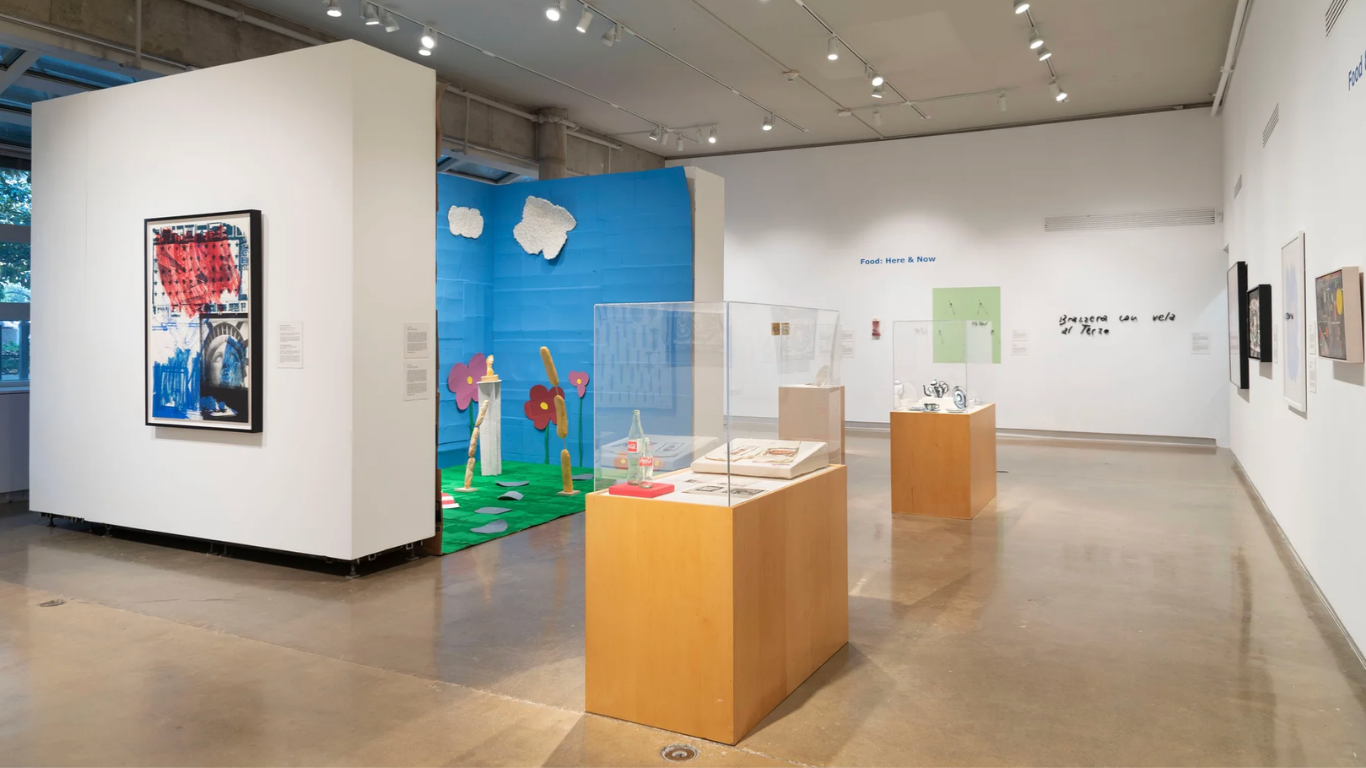
Those intersections became the foundation for What’s for Dinner? Conflict & Consumption in American Food Culture, a recent exhibition at TCU’s Moudy Gallery co-curated by graduate art history students Megan Brimijoin, Hannah Chock, Anly Do, Tori Gentry and Laura Smith.
For the student curators, food offered a subject broad enough to accommodate their different scholarly interests while remaining relevant to nearly every visitor.
“Food connects to everybody’s lived experience,” Chock said. “We were able to talk about an issue that has a lot of different facets that affect everyone.”
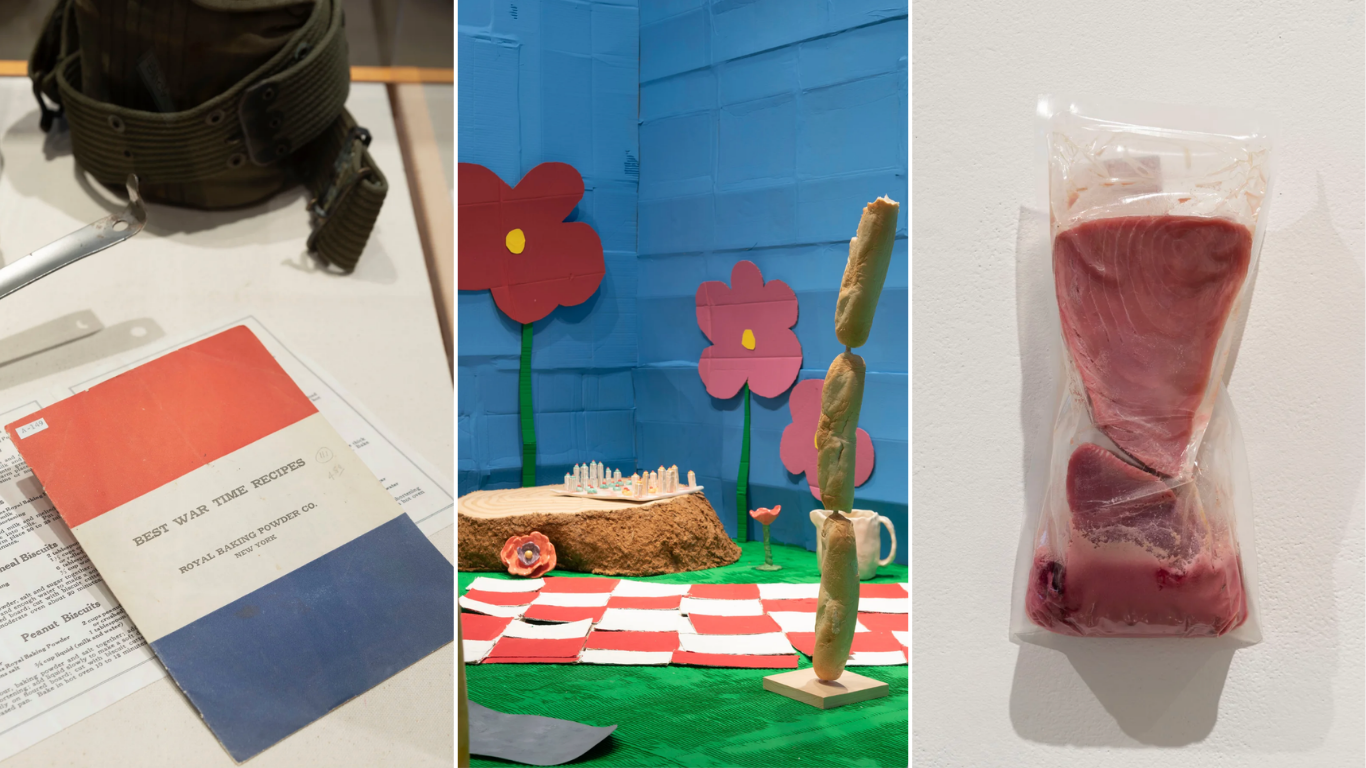
Bringing together fine art, fashion, historical objects and contemporary work, the exhibition used food as an entry point into American visual and material culture. Works by artists including Andy Warhol, Roy Lichtenstein, Wayne Thiebaud, Robert Rauschenberg and Ai Weiwei appeared alongside fashion, archival materials and work by contemporary artists with connections to the Dallas-Fort Worth community.
Building an Exhibition from the Ground Up
The exhibition began months earlier as part of a museum seminar led by Sara-Jayne Parsons, director of TCU Art Galleries. Students met museum professionals from across Dallas-Fort Worth while developing
their own exhibition from concept to completion.
A private Dallas collection provided many of the works, while additional loans came from TCU’s permanent collection, the Texas Fashion Collection at the University of North Texas, Texas Woman’s University and other lenders. Local artists further connected the exhibition to contemporary conversations surrounding food, identity and community.
Each curator brought different interests to the project. Do focused on the relationship between food and conflict, including Vietnam War-era objects that demonstrated how something as fundamental as eating remains embedded within histories of violence.
“Food is interconnected and so intersectional in conflict and how food is used as an oppressive force,” Do said. “I think it all built a cohesive narrative around what food means to all of us.”
Gentry drew on her research in textiles to develop a food and fashion section, while Brimijoin worked closely with living artists and sought out performance work for the exhibition. Some works had previously been exhibited at TCU, while others were created specifically for What’s for Dinner?
For Brimijoin, that process also offered a lesson difficult to replicate in a textbook.
“There is no real textbook that teaches a curator how to deal with living artists,” she said. “It’s something that I think you can either find a way to negotiate or not.”
The students also developed labels and graphics, negotiated loans, chose wall colors, planned programming, handled objects and considered accessibility throughout the galleries, including Spanish translations, large-print labels, seating and navigation for visitors using mobility aids.
“There’s equally the amount of manual labor as there is intellectual labor,” Gentry said. “To be able to be liaison, art handler, installation — that was something that you’re not going to get from just talking about the show.”
Taking the Conversation Beyond the Gallery
From its earliest stages, the curators wanted What’s for Dinner? to do more than discuss food.
The master of art students partnered with Easyside, an artist-led organization with TCU connections that addresses food insecurity and other community needs in Fort Worth. The collaboration brought Easyside-affiliated artists into the exhibition and programming while creating opportunities to support its work in the community.
“We were thinking about from its inception, ’If we’re doing food, how do we not just talk about food, but create a space where we are supporting our community?’” Chock said. “Easyside has the experience, they know the community, they have those connections.”
The partnership also included an artist panel featuring Easyside artists whose work addressed personal experiences with food as well as broader questions of access and resources in Fort Worth.
For the five curators, the experience ultimately offered something difficult to gain through readings or lectures alone: responsibility for the creative, scholarly and practical decisions required to transform an idea into a public exhibition.
“Once you’re actually there and in practice, it’s a whole different ballgame,” Chock said. “We had people guiding us, and it was wonderful. But at the end of the day, we made it happen.”