
TCU Dancers Bring Trisha Brown’s Choreography to the Stage
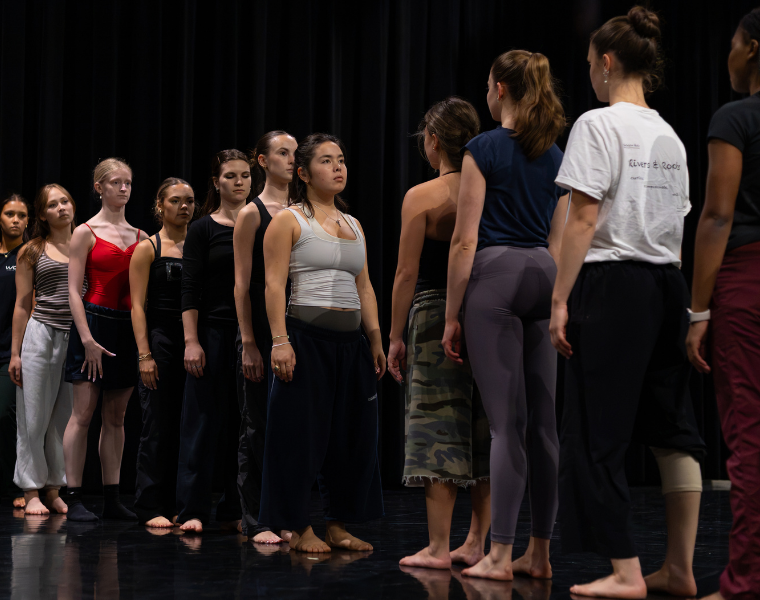
Fourteen TCU dance students are experiencing movement in a new way through an intensive residency exploring the work of influential postmodern choreographer Trisha Brown (1936–2017).
Working with former members of the Trisha Brown Dance Company, students in TCU's School for Classical & Contemporary Dance (SCCD) have spent the fall studying Brown's creative methods and preparing a reimagining of her landmark 1983 work, Set and Reset, for SCCD's fall concert.
“Although I knew Trisha Brown’s name, I never quite understood the impact she had on the dance world,” said Avery Taylor, a junior participating in the residency. “Although the choreography for Set and Reset was first developed in 1983, even today the movement doesn’t appear aged or historic.”
Learning From a Dance Legacy
Brown helped redefine contemporary dance through an approach that challenged performance
conventions, embraced natural movement and encouraged collaboration across artistic
disciplines.
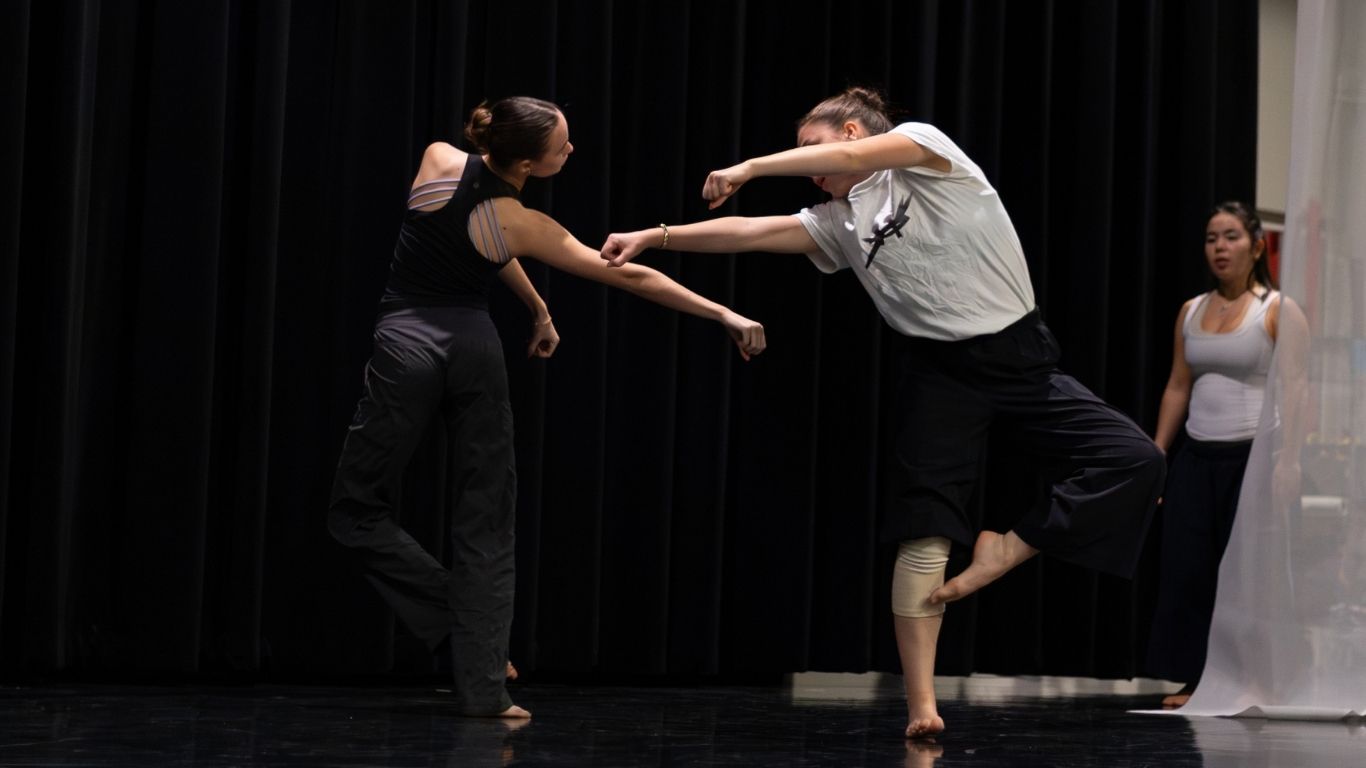
Kimberly Fulmer and Shelley Senter, former Trisha Brown Dance Company dancers who now help preserve and stage Brown’s choreography as répétiteurs, worked directly with SCCD students, introducing them to the movement vocabulary, historical context and creative methods that shaped her work.
Nina Martin, professor of dance and postmodern choreographer, said the residency introduced students to an unfamiliar approach to movement while connecting their technical training to an important period in dance history.
“They were not just learning choreography, they were learning really new ways of thinking about dance,” Martin said.
Rather than simply reproducing the original choreography, the students learned the original movement phrases before experimenting with creating ensemble compositions using the phrases to develop their own interpretation within Brown’s choreographic framework.
For Taylor, the process required a different kind of focus.
“In rehearsal, we might spend an hour on only 30 seconds of choreography," Taylor said. "The creative process forces us to stay 100% in the room with each other. Our full attention is necessary to produce movement that feels true to our bodies rather than forced."
Seeing Dance Differently
One of Taylor’s most meaningful lessons came from Senter’s concept of “seeing not
looking,” which encourages dancers to become active observers of the people and spaces
around them.
Through implementing the “seeing not looking” idea in rehearsal, Taylor began noticing how greater awareness of fellow dancers could change the body’s natural movement.
"Not only has this idea changed the way I dance, but it has shifted something in me in the way I relate to others and the environment outside the SCCD community," Taylor said. "'Seeing' has softened my body, opened my imagination and allowed me to recognize and appreciate the beauty that is constantly circulating around us."
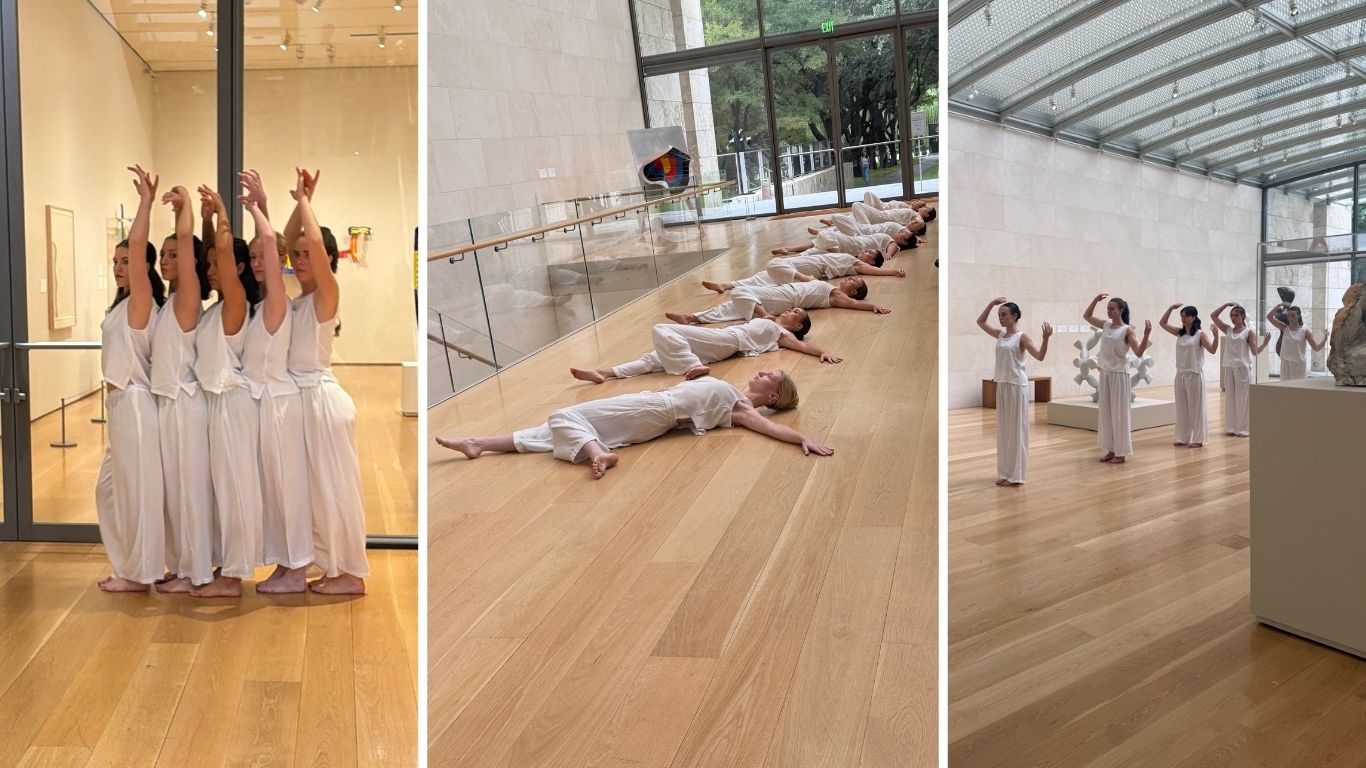
Students also brought their work beyond campus through a recent performance at the Nasher Sculpture Center in Dallas. Presented through the museum, the program featured selections from Brown’s early works alongside excerpts of the choreography students will perform later this fall.
For Martin, the opportunity to learn directly from artists entrusted with Brown’s legacy offers an experience that cannot be fully replicated through videos or traditional dance history courses.
"Dance traditionally is body to body, mind to mind, and has been handed down," Martin said. "Person to person is really the best way to convey dance because the body is the substance of dance."
For Taylor, performing an adaptation of Set and Reset represents an opportunity to share an experience that has changed her relationship with movement.
"Trisha Brown's way of moving feels natural and not forced," Taylor said. "As performers in this piece, the objective is to see each other and dance with each other instead of worrying about entertaining an audience."
Experience Trisha Brown's choreography at the SCCD fall concert.