
‘Stations of Mychal’ Brings Music, Memory and History to TCU
Twenty-five years after the Sept. 11 terrorist attacks, a generation of college students has grown up knowing the day only through photographs, videos, textbooks and the stories of those who lived through it.
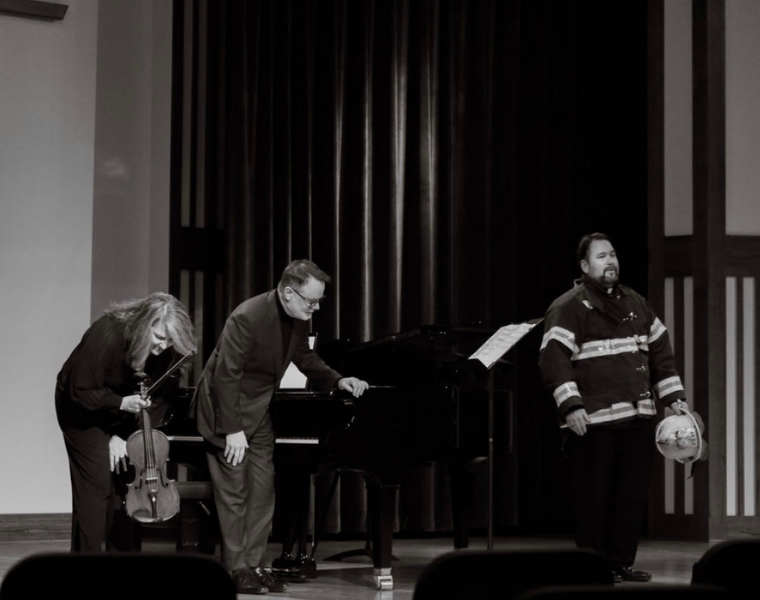
This fall, TCU audiences will have another way to engage with that history through Stations of Mychal, a 75-minute song cycle that tells the story of Father Mychal Judge, a friar and New York City Fire Department chaplain who died while ministering to first responders at the World Trade Center on Sept. 11, 2001.
The performance comes to TCU to commemorate the 25th anniversary of the attack. Through music and theatrical storytelling, the work explores not only the tragedy of Sept. 11 but the life of one person whose compassion and service extended far beyond that day.
Telling One’s Life Through Music
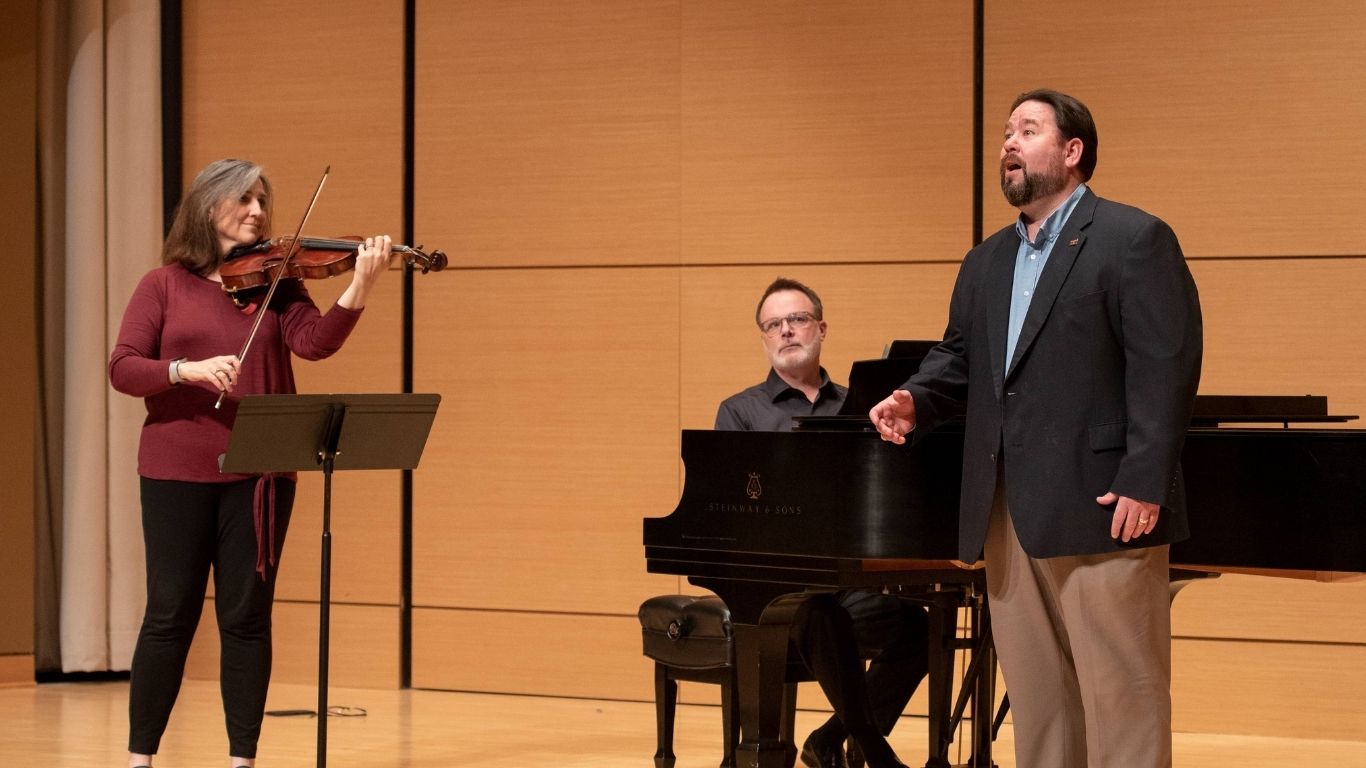
Richard Novak, part-time voice instructor in the School of Music, first encountered Judge's story
while researching the cross discovered among the wreckage at Ground Zero. As he learned
more, Novak became interested in the life behind the man identified as casualty 0001
following the attacks.
Structured around the 14 Stations of the Cross, Stations of Mychal pairs moments from Judge's life with music by Kevin Salfen, professor of music at the University of the Incarnate Word. The libretto was written by Rick Davis, dean of the College of Visual and Performing Arts at George Mason University.
For Salfen, learning about Judge transformed the project from a story about New York into something more universal.
“Mychal's story could mean something to other people,” Salfen said. “It didn't matter what their connection to New York was. In some ways, 9/11 is a moment for everyone. It became a world event. It changed human history that day.”
Written for tenor, viola and piano, the work uses recurring musical ideas to represent elements of Judge's life, including his Irish heritage, New York City, his priesthood and the events of Sept 11. For the 25th anniversary performances, video projections will add another layer to the work and help immerse audiences in the story.
Remembering Through Art
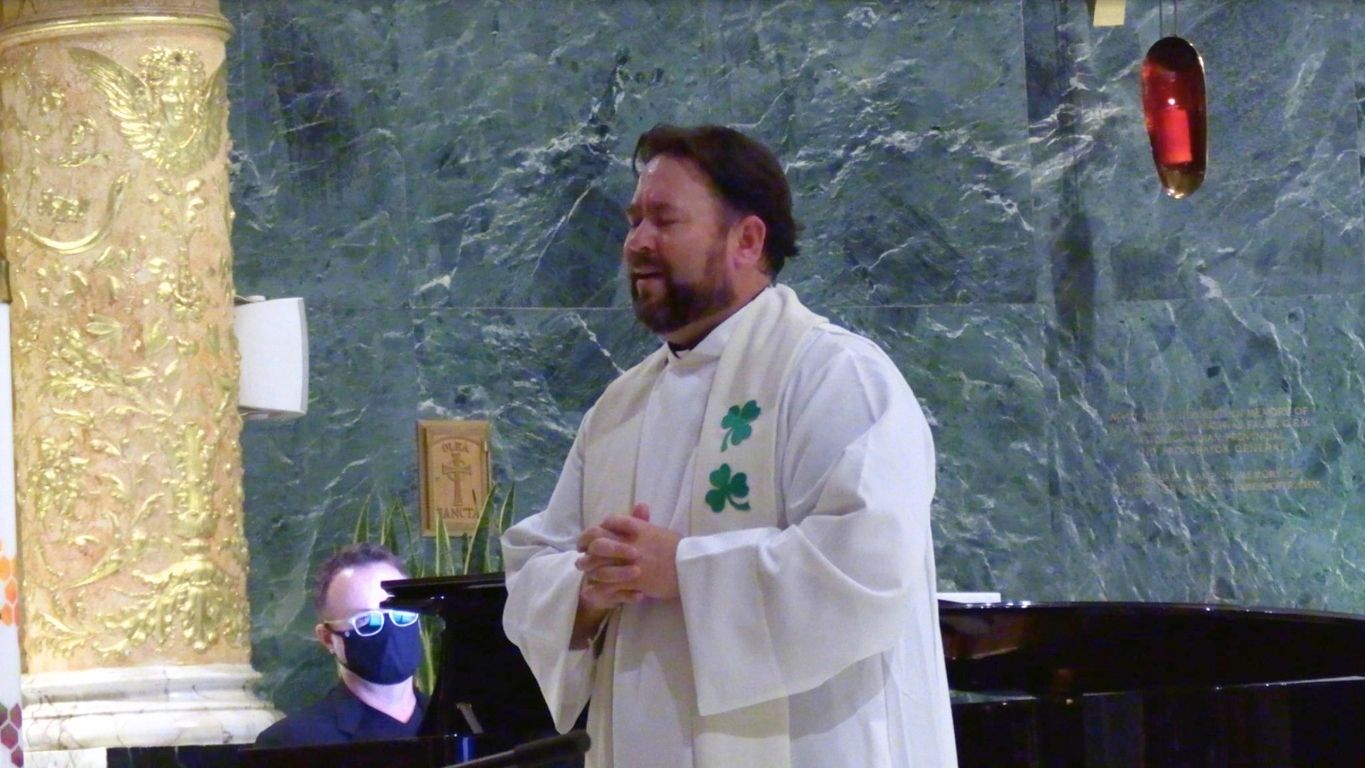
For Novak, performing Stations of Mychal 25 years later carries particular significance as fewer college students have a personal
memory of the attacks.
“It's a different way of teaching history,” Novak said. “Every way he lived his life teaches us something, and those lessons are still relevant today.”
Historical details are woven throughout the performance, including text adapted from Judge's final homily, delivered Sept. 10, 2001, and radio traffic based on original air traffic control transcripts from the morning of the attacks.
At its center Stations of Mychal is about preserving the story of one life within an event remembered for its enormous scale.
“Behind every one of those firefighters and police officers and first responders and people who were just in their office in the World Trade Center, there are stories,” Novak said. “This is just a way of telling one man's story. And what an extraordinary story it is.”