
James Enos Brings a World of Ideas to TCU School of Art
For James Enos, art is more than creating something to be seen. It's a way of understanding the world, connecting with others and imagining what might be possible.
That philosophy has taken him across port cities around the world, exploring the intersection of culture, migration, infrastructure and the environment through drawing, sculpture and collaborative projects.
Now, as the new director of TCU's School of Art, Enos is bringing that same curiosity to Fort Worth, where he sees opportunities for artistic exploration, interdisciplinary research and community engagement.
"One of the simplest views I have about art is that it's our first means of understanding how we feel about the world," Enos said. "It's perhaps the most important thing we can do together to explore, imagine and change the collective ethos."
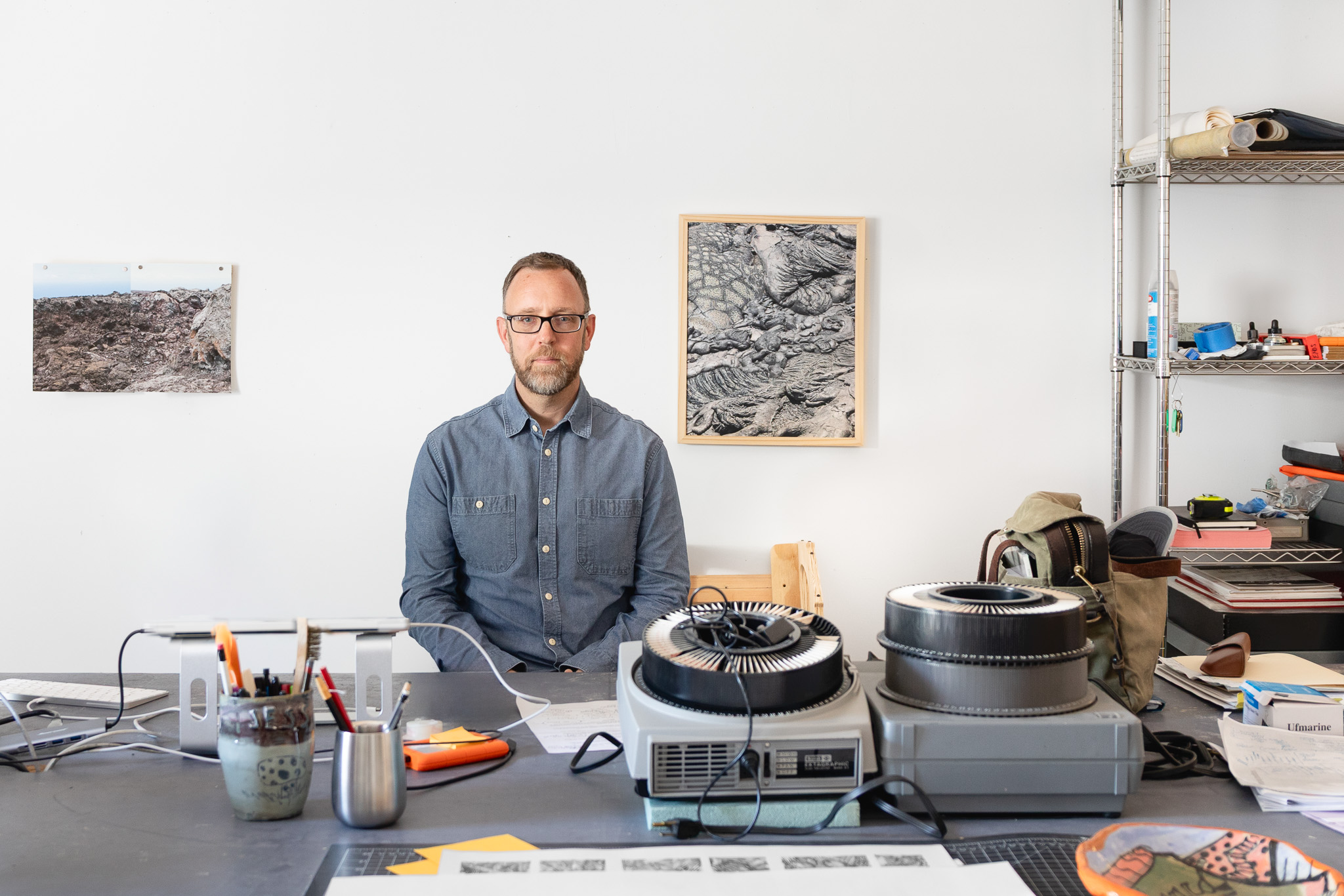
From Port Cities to Fort Worth
For more than 15 years, Enos has worked with international networks of artists and
researchers exploring how port cities connect people, cultures and economies. His
projects have taken him to locations including Taiwan, China, Finland and Germany,
where he has examined the relationships between urban development, environmental change
and the movement of materials across the globe.
His interest in ports is also personal. Enos family migrated from the Azores to Hawaii during the late 19th-century sugar boom, a history that informs his understanding of how trade, labor and migration shape communities.
"In the simplest sense, I think my work is about the desire for connectivity," Enos said.
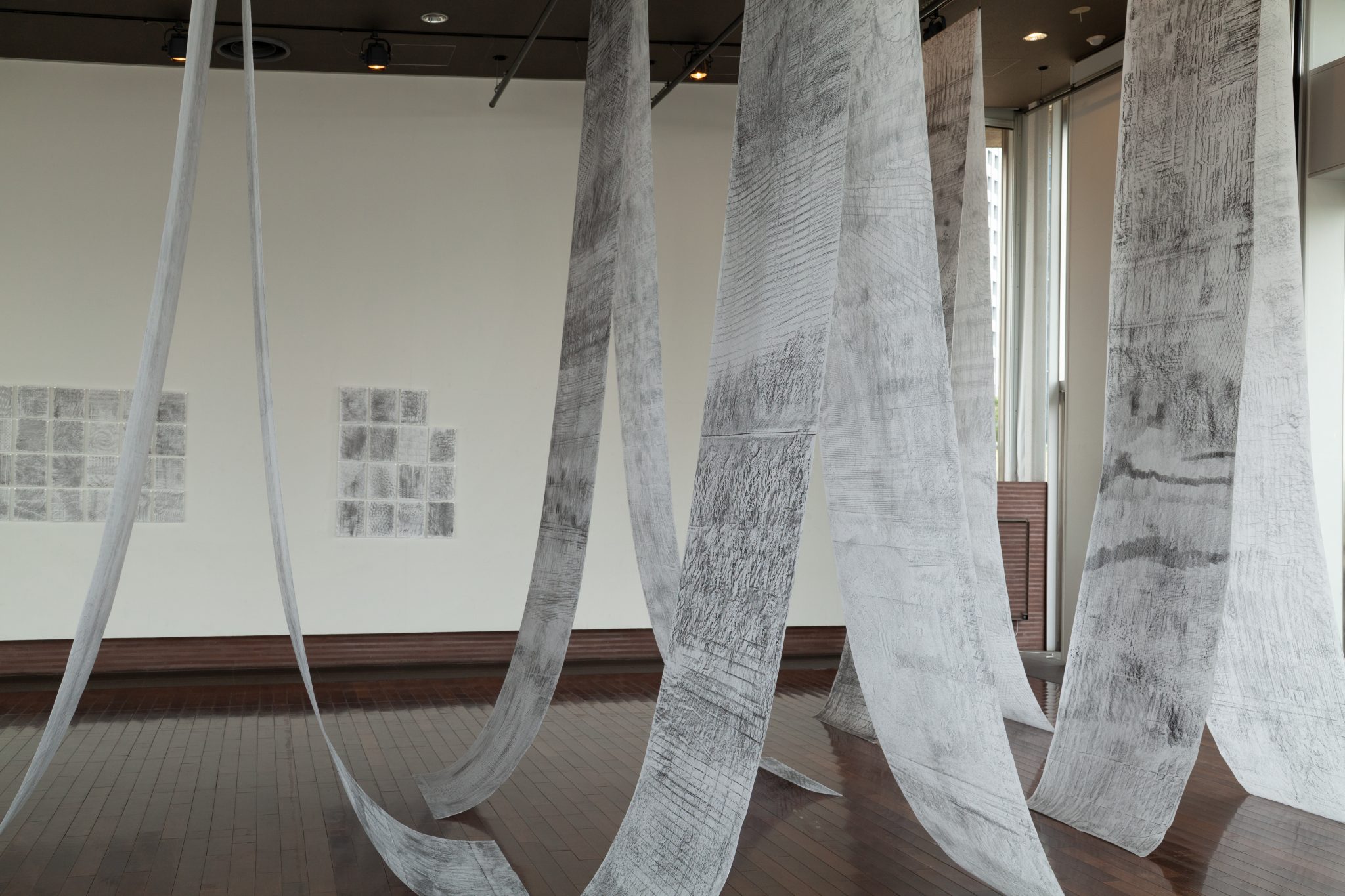
That interest continues through projects such as This Is Not a Map, which explores how people experience and understand their surroundings. Using walking,
drawing, surface rubbings and sound recordings, they document places through direct
observation and physical interaction rather than relying solely on maps or digital
information.
For Enos, these methods raise questions about the relationship between human experience and technology, particularly as systems change how people observe and interact with their environments.
His current research is also turning toward Texas. Through an international collaborative project called Sites, Enos plans to explore the relationships between energy, infrastructure and the environment, connecting research in European port cities with future work along the Texas Gulf Coast.
"There's a ton to learn about the world through this place," Enos said. "If there is zooming into one place, for me, it's zooming in to think out."
The ‘Perfect Moment’
Enos was drawn to TCU by the strength of its faculty, the university's commitment
to interdisciplinary education and the thriving arts community across the Dallas-Fort
Worth area.
He sees the region's museums, galleries, nonprofits and artist-led organizations as valuable resources for students and faculty, offering opportunities to connect academic work with professional practice and community engagement.
"There's an energy and a power to it," Enos said of the local arts community. "TCU is at this perfect moment."
As director, Enos hopes to build on the School of Art's existing strengths while encouraging collaboration that extends beyond traditional disciplinary boundaries.
His own research reflects that approach, bringing together artists, scholars and professionals to explore questions that cannot be answered by a single field of study.
"Why interdisciplinary? Because bigger questions are required of us," Enos said. "Artists have power in shaping those questions and solving problems or proposing new ways of seeing."
That perspective also aligns with TCU's continued emphasis on research and creative activity, where artistic practice contributes to the development of knowledge alongside scientific and scholarly inquiry.
For Enos, the value of an arts education extends well beyond preparing students for a particular profession. It encourages them to think critically, engage with different perspectives and recognize their ability to influence the world around them.

An Artist for Artists
Although his creative work has taken him around the world, Enos approaches his new
leadership role with a straightforward priority: supporting the artists who make up
the School of Art.
His own path into art was not entirely linear; he studied architecture and industrial management before pursuing art. These experiences continue to inform his interdisciplinary practice and understanding of the many directions an artistic career can take.
He hopes students recognize that their creative interests can lead to opportunities beyond traditional expectations, whether through exhibitions, research or collaborations with other disciplines.
For Enos, leading the School of Art is an opportunity to help create the conditions for students and faculty to explore those possibilities while contributing to the larger creative community.
"I just think there's such an agency and such an optimism and such a power to people studying art," Enos said. "Working for other artists is a really great thing."