
How a TCU Graphic Design Student Turned Research into a Bison Story
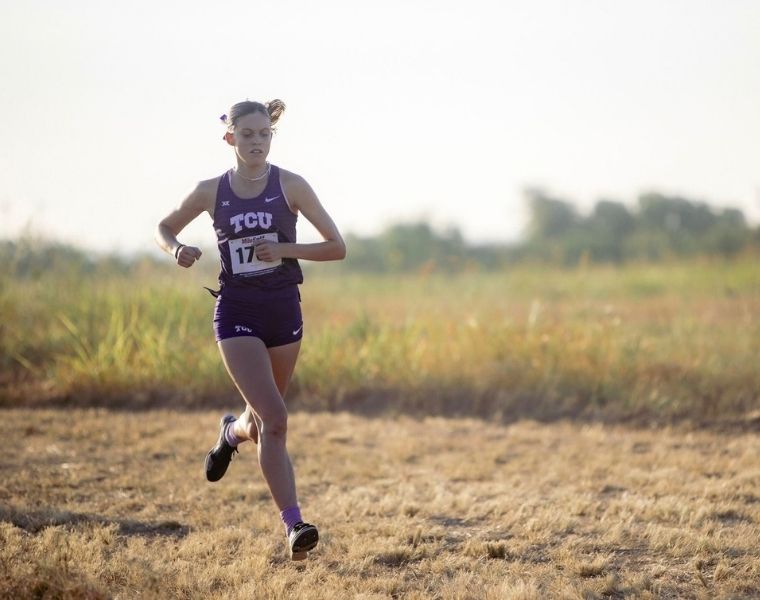
TCU cross country and track runner McKenzie Bailey is fast, like 5000m in 16:29.11 fast.
And yet in a race against a bison, she’d lose… by a lot.
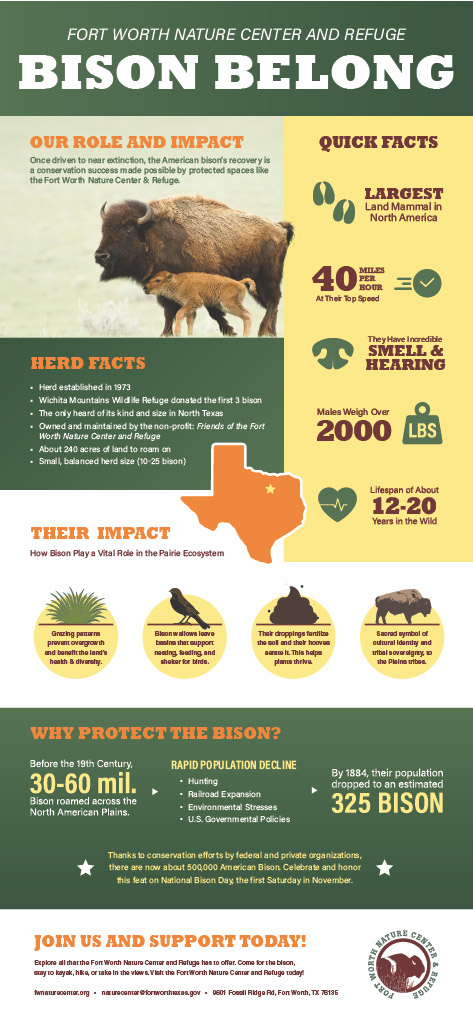
Despite weighing up to 2,000 pounds, a bison can easily outrun a human. A performance-maxxing bison would beat a horse in a short sprint.
These are just a few of the facts you learn from the senior graphic design student’s infographic, created as part of TCU’s research partnership with the Fort Worth Nature Center & Refuge (FWNCR).
Bailey’s work is on display now, demonstrating how research and creative activity intersect to help connect science and the community. For researchers, discoveries are only part of the job. Helping people understand them is equally important, and that’s where designers become research collaborators.
“When I hear the word researchers, I, too, immediately picture research in a scientific lens, but research extends far beyond scientific inquiry and exploration,” Bailey said. “As a designer, research is always involved. In many ways, this is the piece of the process that makes for the strongest, most impactful designs.”
Creating the infographic grew out of an experiential learning opportunity created by assistant professor of graphic design Jennifer Cadieux Kimbrel, who is part of TCU's interdisciplinary Natural Resources Research Initiative.
“Collaborative projects such as this give students the opportunity to see that graphic design is not simply about making information look good — it is about making complex ideas understandable, accessible and engaging,” Cadieux Kimbrel said. “Nearly every discipline and area of research can benefit from thoughtful visual communication, and I want my students to experience firsthand the value they bring to interdisciplinary teams. They are not just supporting the research; they are helping that research connect with people.”
In this case, Bailey is helping connect the community to one of Fort Worth’s greatest natural resources.
The reserve’s bison herd is one example of the conservation work being led by FWNCR. They have restored the herd’s grazing pastures, increased the abundance of native grasses and helped the bison population thrive. Today, visitors can see the herd grazing in the south pasture along Buffalo Road.
“The FWNCR is for anyone. Families with young children, college students, adults and
everyone in-between come to explore nature, learn about the animals, take in the beautiful
views and escape from the business of life,” Bailey said. “Creating an infographic
that was visually easy to read while still interesting and exciting to all viewers
posed many challenges, but this is ultimately what I am most proud of … I care a lot
about nature and using design to have a positive impact on nature, communities and
causes that matter to me, and the world as a whole.”
Research? Check.
Creative activity? Check.
Big 12 competition? Check.
Outrun a bison? Not a chance.