
TCU Music Faculty Bring Original Compositions to National Conference
Two TCU School of Music composers are bringing their creative work to a national audience at the 2026 College Music Society National Conference, highlighting the connections between composition, performance and collaboration across institutions.
Faculty members Jiyoun Chung and Ryan Lindveit will have works performed at the conference, which brings together musicians, scholars and educators from across the country to explore the future of music in higher education.
The performances reflect two different approaches to contemporary composition: Chung's arrangement of a traditional Korean folk song for trombone choir and Lindveit's newly commissioned chamber work, which will receive its premiere with three TCU string faculty members.
Sharing Korean Musical Traditions
For composer Jiyoun Chung, music offers an opportunity to introduce audiences to cultural
traditions they may not have encountered before.
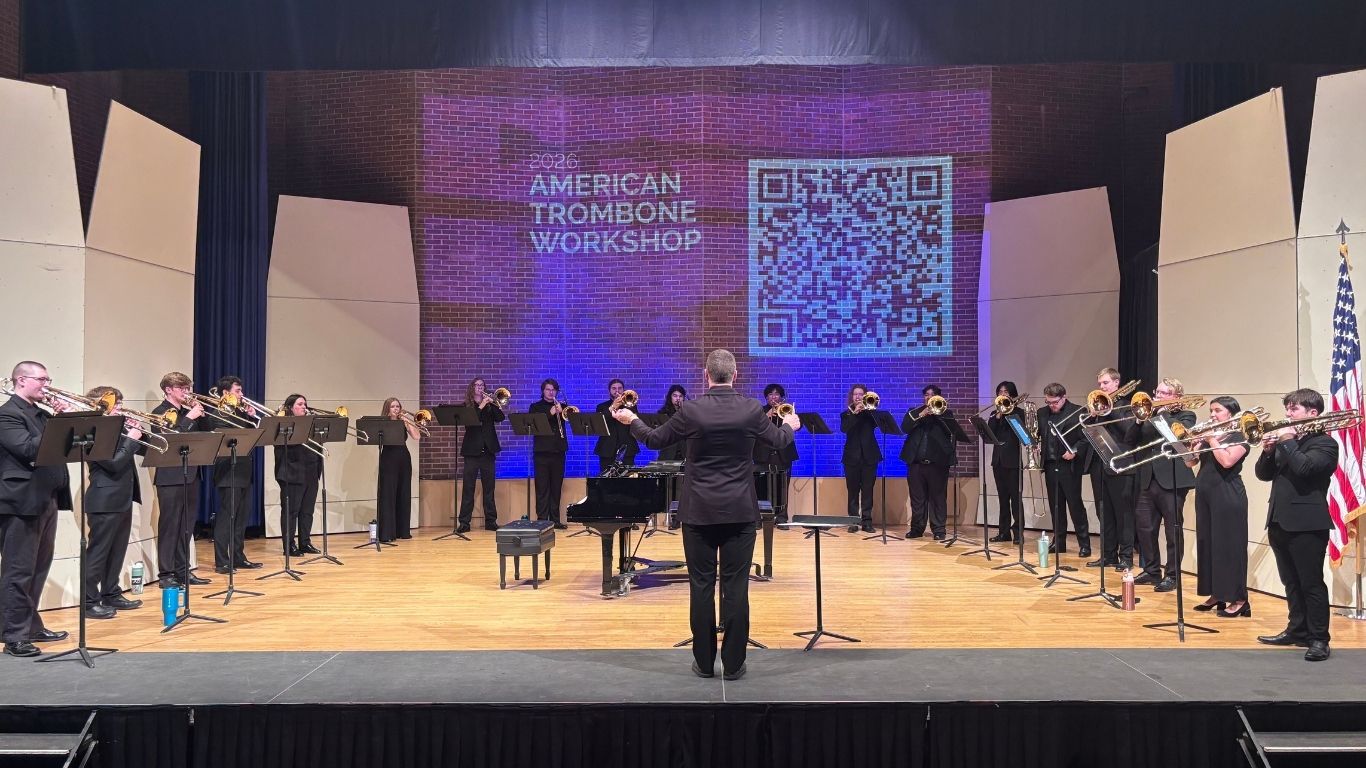
Her composition Kwaejina Ching Ching Nane draws inspiration from a traditional folk song originating in Gyeongsang Province in southeastern Korea, known for its lively rhythms, communal singing and dancing.
Originally commissioned by the Central Washington University Trombone Choir, the arrangement premiered at the 2026 American Trombone Workshop. At the conference, it will be performed by the Central Michigan University Trombone Choir under the direction of Cole Bartels.
Chung translated the original song's call-and-response structure into an exchange between individual trombones and sections of the ensemble, using traditional Korean rhythmic patterns, known as jangdan, to build momentum throughout the piece.
"I wanted to share that joy with players and audiences who may never have heard this song," Chung said.
As a Korean American composer, Chung frequently draws inspiration from East Asian music, philosophy and culture, bringing those influences into her creative research and teaching.
"My music reflects who I am, and as a Korean American, I have always been drawn to bringing different cultures and perspectives together," she said. "I hope this work expands the range of musical languages available to us and creates richer, more diverse experiences for audiences."
For Chung, sharing the composition with collegiate musicians and educators creates opportunities for those traditions to reach new classrooms, ensembles and communities.
Bringing a New Composition to Life
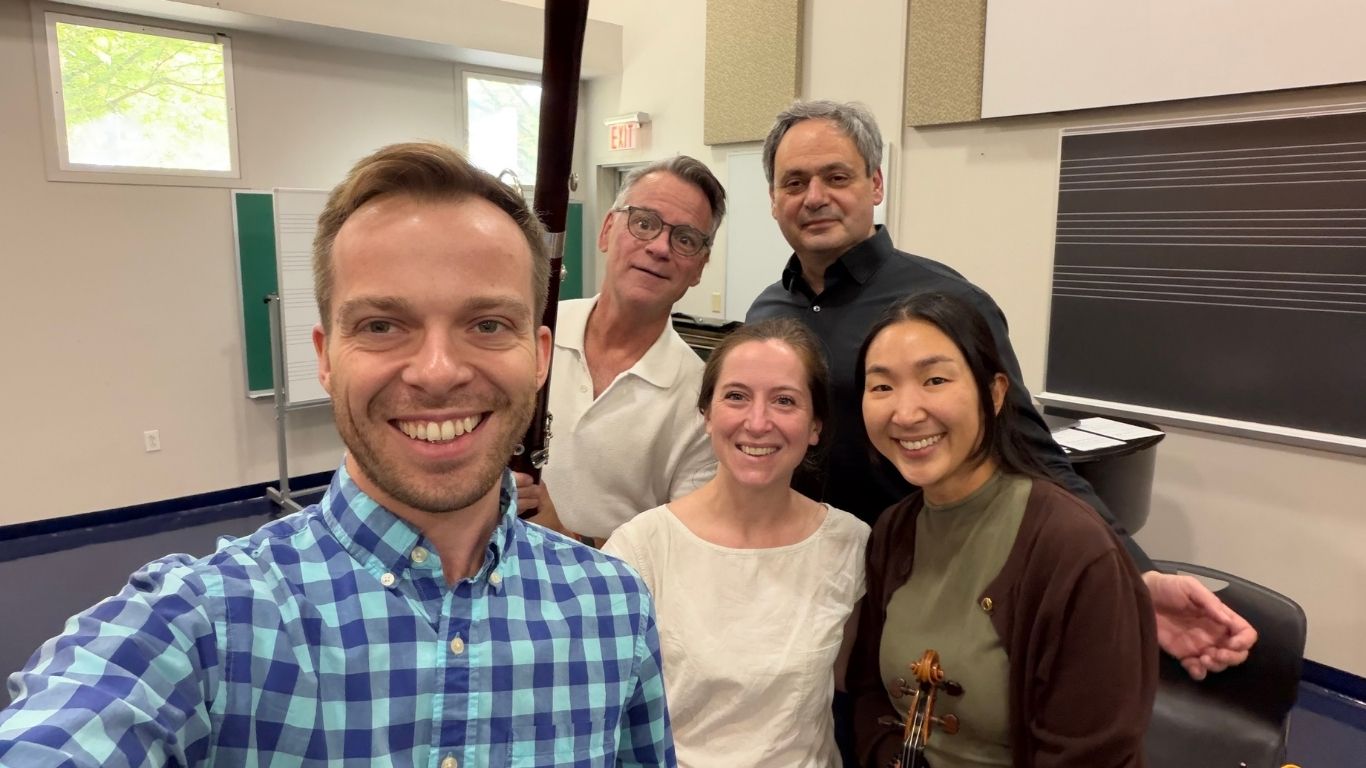
For fellow TCU composer Ryan Lindveit, the conference marks the premiere of Unicorn, a new chamber work commissioned through the Pi Kappa Lambda International Music
Honor Society's Commissioned Music Project.
Written for bassoon and string trio, the composition will be performed at the Grand Rapids Art Museum by University of Michigan bassoon professor Jeffrey Lyman alongside TCU string faculty Misha Galaganov, Juliette Herlin and Liz Lee.
The piece draws inspiration from the bassoon's unusual range and expressive versatility, qualities Lindveit found reminiscent of the contrasting ways unicorns are portrayed in mythology and popular imagination.
"I adore the bassoon, an instrument which is commonly stereotyped as the clown of the orchestra, but which is actually quite versatile and deeply expressive," Lindveit said.
After accepting his position at TCU, Lindveit invited his new colleagues to collaborate on the project. Their artistry helped shape his approach to writing the piece.
"As a new faculty member, it has been a pleasure to get to know Liz, Misha, and Juliette as musicians and colleagues," he said. "I looked up recordings of their work and was deeply inspired by their artistry and musicianship while composing the piece."
Beyond the premiere, Lindveit sees the conference as an opportunity to connect with musicians across disciplines and introduce TCU faculty artistry to a national audience.
Those same professional experiences influence his teaching, particularly his emphasis on collaboration, pursuing opportunities and developing relationships within the music industry.
"Life in the arts is a long game; your personal artistic practice and your collaborative relationships are far more important than any prizes," Lindveit said.
Together, the conference performances demonstrate how TCU School of Music faculty contribute to contemporary musical scholarship while building professional connections that enrich their teaching and creative work.